Soy Candle Ingredients That Shape Your Ritual
A candle can change the feeling of a room before you have even settled into it. The right soy candle ingredients turn a quiet bath, an unhurried morning, or an evening with your favorite people into something warmer and more intentional. They also determine how a candle burns, how fragrance fills a space, and whether each moment feels as beautiful as it smells.
A thoughtfully made soy candle is not simply wax with a scent. It is a careful balance of wax, wick, fragrance, color, and craftsmanship. Understanding what belongs inside helps you choose candles that suit your home, your rituals, and the atmosphere you want to create.
The Foundation: Soy Wax
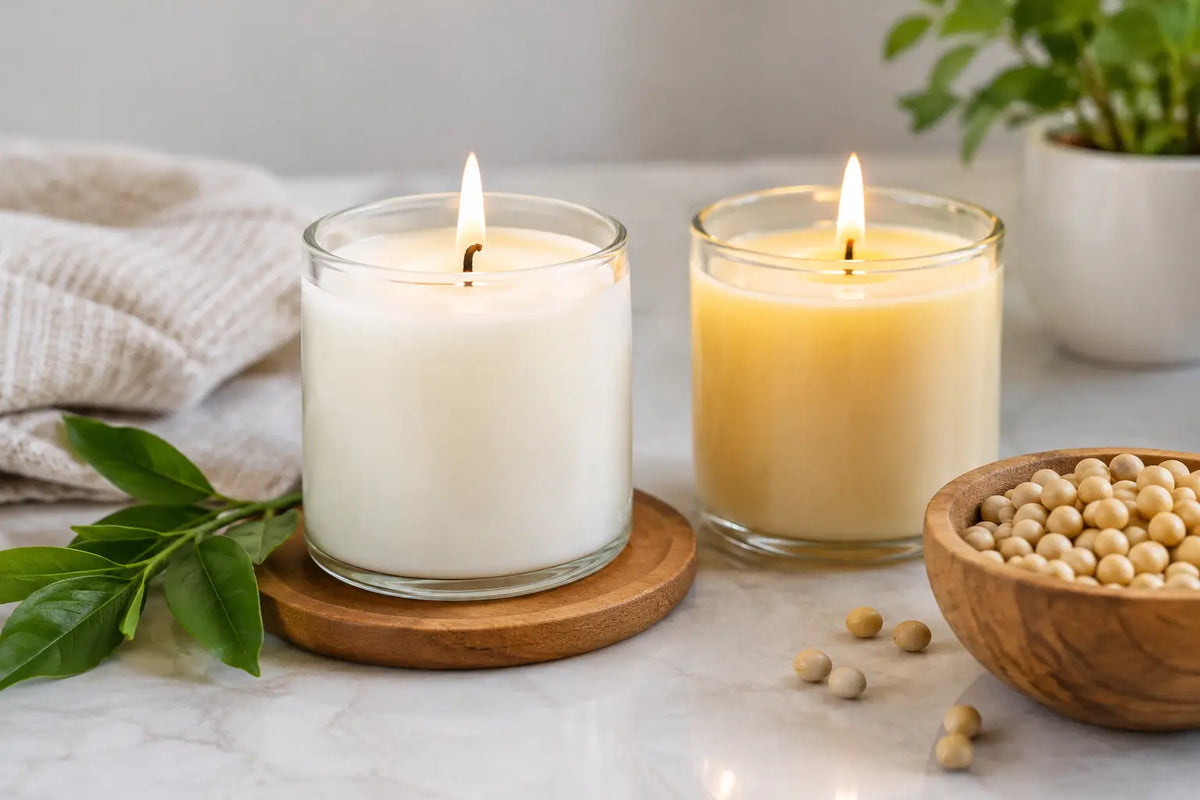
Soy wax is made from soybean oil that has been processed into a solid wax. It is a popular choice for home fragrance because it is plant-based, burns at a relatively low temperature, and creates a soft, inviting glow. That lower melting point often allows soy candles to burn more slowly than some traditional wax candles, giving you more time with the fragrance you love.
Pure soy wax usually has a creamy, natural appearance rather than a bright, glossy white finish. It may also develop small imperfections, such as frosting along the glass or a slightly textured top after burning. These are often normal characteristics of a natural wax, not a sign that your candle is lacking in quality. Handmade beauty has a little personality.
Not every candle labeled "soy" is made with 100% soy wax. Some formulas blend soy with other vegetable waxes or small amounts of paraffin to improve scent throw, appearance, or performance. A blend is not automatically a poor choice, but transparency matters. If a fully plant-based candle is important to you, look for clear language about the wax composition rather than relying on the word soy alone.
Why wax affects the fragrance experience
Wax is the vessel that carries fragrance through your room. Soy wax tends to create a gentle, gradual scent experience, especially while the candle is unlit. Once burning, warmth releases the fragrance oils into the air. The size of the room, airflow, candle diameter, and amount of fragrance in the formula all influence how strongly you smell it.
That is why a soft vanilla, linen, or lavender candle may feel perfect in a bedroom but too subtle for an open-concept living space. A deeper blend of amber, sandalwood, citrus, or spice may carry farther. There is no universal "best" scent throw. It depends on the mood, the setting, and how you want your space to embrace you.
Fragrance Oils Bring the Story to Life
Fragrance oil is what transforms a soy candle from a source of light into a sensory memory. It may be composed of natural aromatic materials, safe synthetic aroma ingredients, or a blend of both. The word synthetic can sound less romantic, but it does not automatically mean inferior or unsafe. Many fragrance notes cannot be sustainably extracted from nature, and well-formulated fragrance oils allow makers to create nuanced scents with consistency.
A beautiful fragrance is built in layers, much like a fine perfume. Bright top notes such as bergamot, lemon, or fresh berries offer the first impression. Floral, herbal, or fruit notes often give the heart of the scent its character. Then grounding base notes like musk, vanilla, cedar, amber, and sandalwood linger in the room and give the blend depth.
For an elevated home ritual, seek fragrances that feel emotionally aligned with what you need. Clean citrus can bring a sense of clarity to your workspace. Warm gourmand notes can make a kitchen or living room feel generous and welcoming. Soft florals and woods can create the kind of calm that invites you to exhale.
Essential oils versus fragrance oils
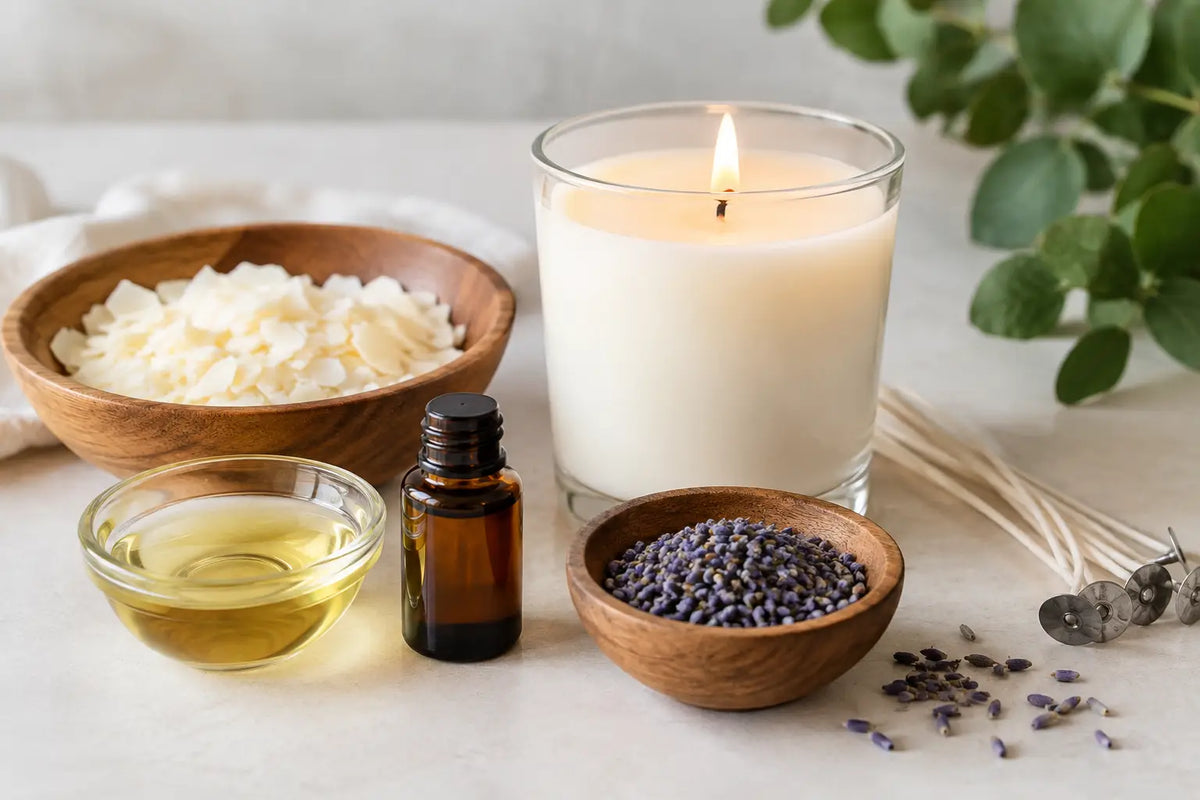
Essential oils are concentrated aromatic extracts from plants. They can be lovely, but they are not always ideal as the only fragrance source in candles. Some are delicate under heat, some have a limited scent range, and some do not provide a strong throw in wax.
Fragrance oils offer more creative range and can be formulated for candle performance. The key is responsible sourcing and proper use levels. A quality maker chooses oils designed for candles, tests each formula, and uses them at a concentration the wax can hold safely. More fragrance is not always better. Too much can affect how a candle burns, sweat from the wax, or create excess smoke.
The Wick Is Small but Powerful
The wick may be the smallest visible ingredient, yet it has one of the biggest jobs. It draws melted wax upward to feed the flame, which creates the melt pool that releases fragrance. A wick that is too small can tunnel, leaving wax around the edges and weakening the scent experience. One that is too large can make the flame overly high, burn through wax too quickly, or create soot.
Cotton wicks, often braided with paper fibers for structure, are a common choice in soy candles. They offer a classic, steady burn when correctly paired with the wax and vessel. Wood wicks create a gentle crackling sound that can feel especially cozy during a slow evening at home, but they require their own careful testing and a little more attention from the candle lover.
No wick type is universally superior. The best one is the wick that has been tested for that exact wax, fragrance, jar, and diameter. This is where artisan candlemaking becomes a practice of patience rather than a simple recipe.
Before each burn, trim the wick to about one-quarter inch. A trimmed wick helps encourage a calmer flame, reduces mushrooming at the tip, and keeps the candle experience looking polished.
Color, Additives, and What They Do
Some soy candles are left naturally creamy and uncolored, while others use candle-safe dyes to complement the fragrance or the season. Color can make a candle feel festive, romantic, or luxe, but it should never distract from safe performance. Too much dye can affect the wick and burn behavior, which is why a restrained hand often creates the most elegant result.
Certain makers use additives to improve the candle's look or scent performance. These may help with adhesion to the glass, smoothness of the surface, or how the fragrance binds to the wax. Additives are not necessarily a red flag, though a minimalist ingredient approach appeals to many shoppers who want a simpler home-fragrance ritual.
You may also see candles topped with dried flowers, herbs, crystals, or glitter. They can be visually striking, but anything placed close to a flame deserves caution. Decorative materials can interfere with the burn and may become a fire hazard. For a candle meant to be lit regularly, a clean wax surface is often the safer and more timeless choice.
What “Clean Burning” Really Means
“Clean-burning” is a phrase often used in candle shopping, but it is not a guarantee that a candle produces no emissions or requires no care. Any burning candle creates combustion byproducts. A cleaner experience is usually about selecting a well-made formula, burning it correctly, and maintaining the wick.
Look for candles made with thoughtfully selected wax, fragrance formulated for candle use, and wicks free of lead. Then honor the burn instructions. Let the first burn create a broad melt pool, but do not leave a candle burning for extended periods. Keep it away from drafts, children, pets, curtains, and anything that could catch fire. Never leave a lit candle unattended.
A candle that smokes heavily, flickers wildly, or develops a very tall flame may need its wick trimmed. If that behavior continues, extinguish it and allow it to cool. Luxury should always feel comforting, never complicated or careless.
Choosing Ingredients That Fit Your Home
Reading a candle label is a quiet form of self-care. Start with the wax type, then consider whether the fragrance family matches the atmosphere you want. Notice the vessel too: a well-designed jar helps support even burning and can become a beautiful keepsake once the candle is finished.
At Marie's Blazing Aromas, the spirit of a handcrafted soy candle is about more than filling a room with fragrance. It is about creating space for confidence, calm, memory, and soft restoration. The ingredients matter because the feeling matters.
Choose the scent that makes you pause at the door, breathe a little deeper, and remember that your home deserves to hold you gently.