Perfume Oil vs Spray: Which One Feels Like You?
A fragrance should feel like more than a finishing touch. It can be the quiet confidence you carry into a room, the softness that settles you after a long day, or the familiar scent that makes an ordinary moment feel like your own. When comparing perfume oil vs spray, the better choice is not about following a rule. It is about how you want your fragrance to live on your skin, move through your day, and become part of your ritual.
Both formats can be beautiful. Both can hold rich, expressive scent stories. Yet they wear differently, apply differently, and create different kinds of presence. Understanding those differences makes it easier to choose a fragrance experience that feels personal, polished, and true to you.
Perfume Oil vs Spray: The Essential Difference
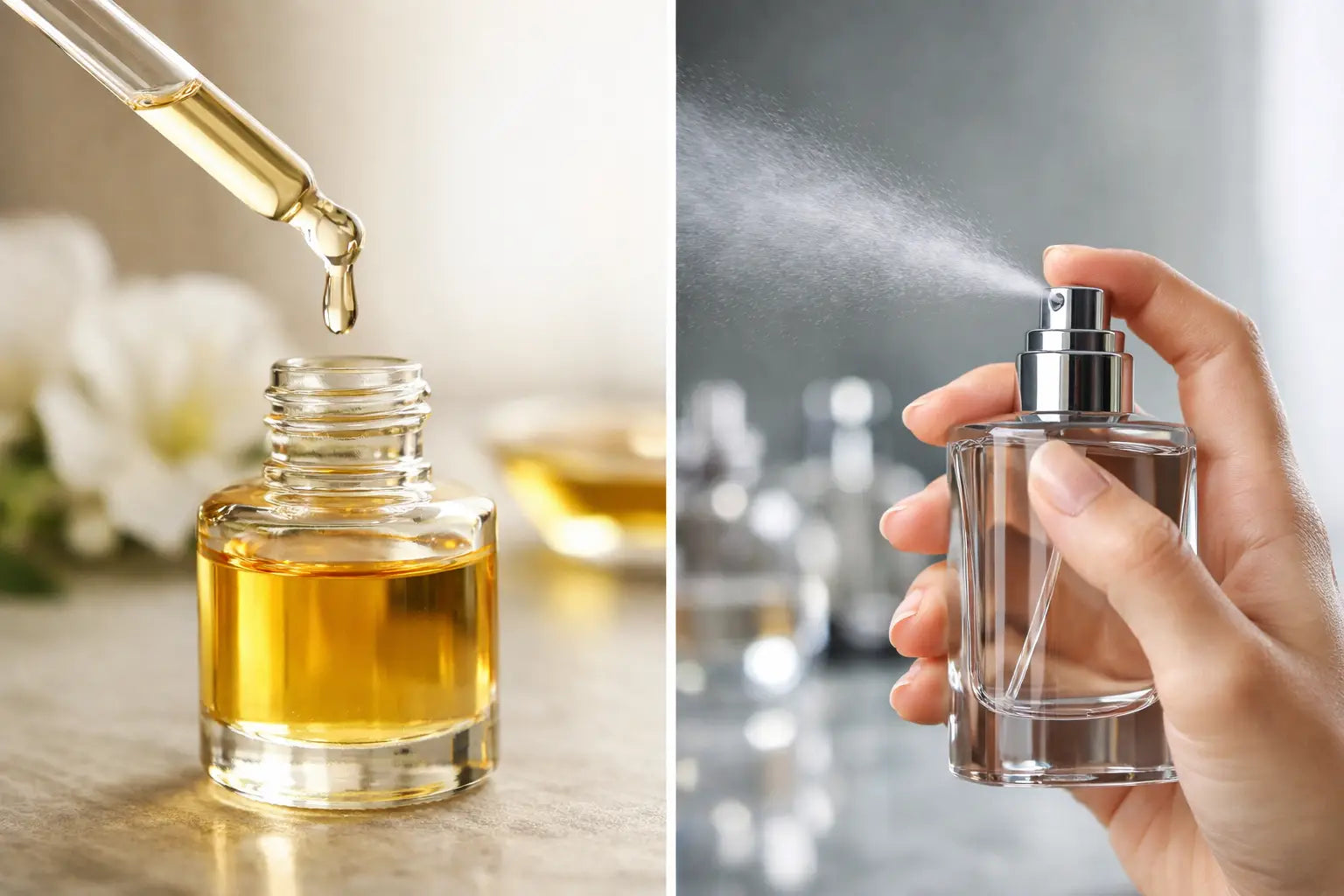
The main difference comes down to the fragrance base. Perfume sprays are typically blended with alcohol, which helps the scent evaporate and disperse into the air. That evaporation is what gives a spray its airy lift and noticeable trail, often called projection or sillage.
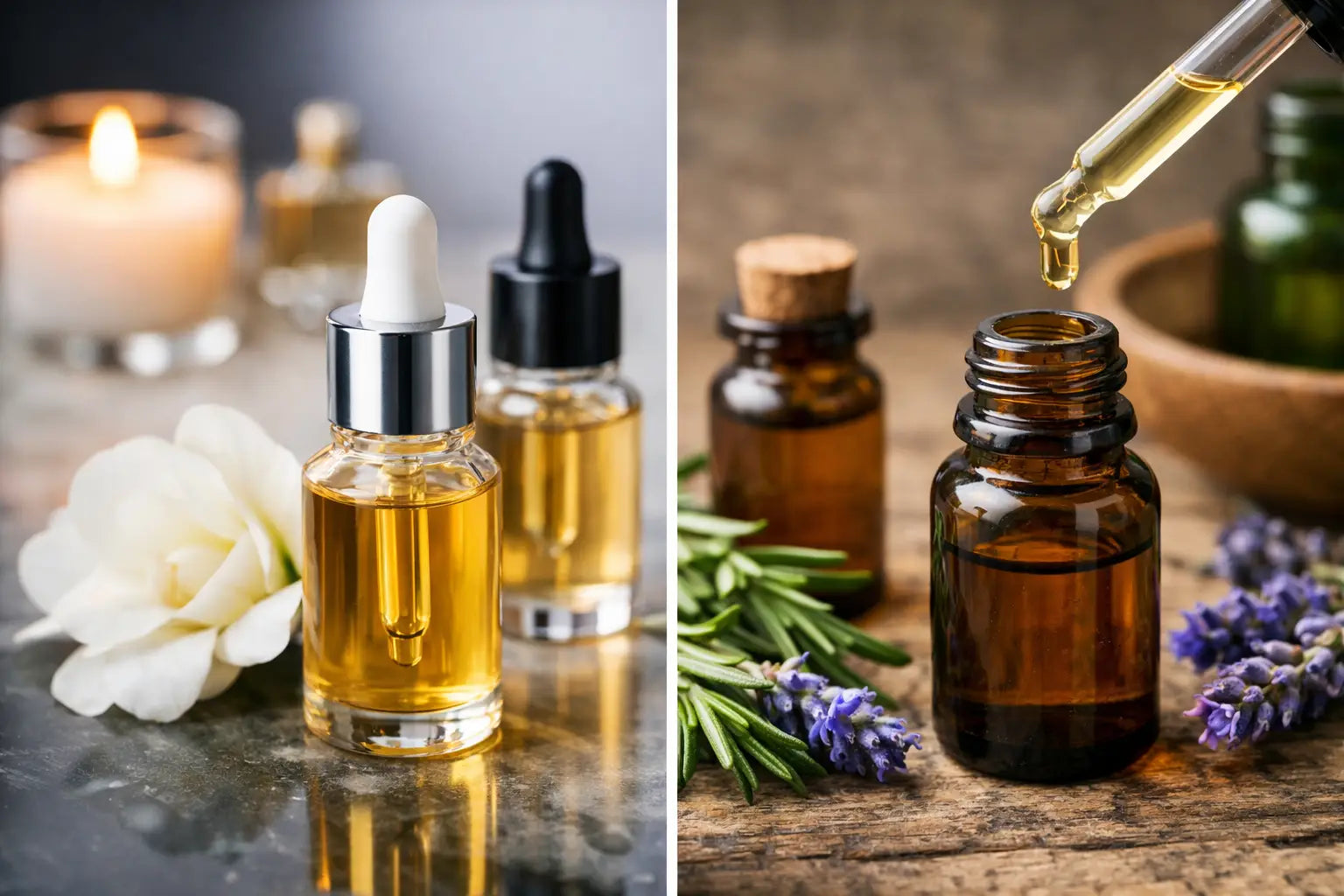
Perfume oils are blended in a nourishing oil base rather than alcohol. They sit closer to the skin and warm gradually with your body, allowing the scent to unfold in a more intimate way. Instead of announcing itself from across the room, a perfume oil becomes a soft, memorable presence for anyone who comes close.
Neither experience is automatically better. A spray can feel glamorous, expansive, and ready for a celebration. An oil can feel sensual, grounding, and wonderfully personal. Your ideal format may even change with the season, setting, or mood you want to create.
Why Perfume Oil Feels So Personal
Perfume oil is made for those who want their fragrance to feel like a secret layer of luxury. Applied directly to pulse points, it stays near the skin and develops slowly as your natural warmth brings out different notes. A bright citrus may soften into creamy vanilla. A floral heart may become warmer and more velvety as the hours pass.
For many people, the alcohol-free nature of perfume oil is a meaningful benefit. Alcohol-based fragrance can feel drying for some skin types, especially during colder months or when skin is already sensitive. An oil-based formula can create a softer application experience, though every person’s skin is different and a patch test is always a thoughtful first step.
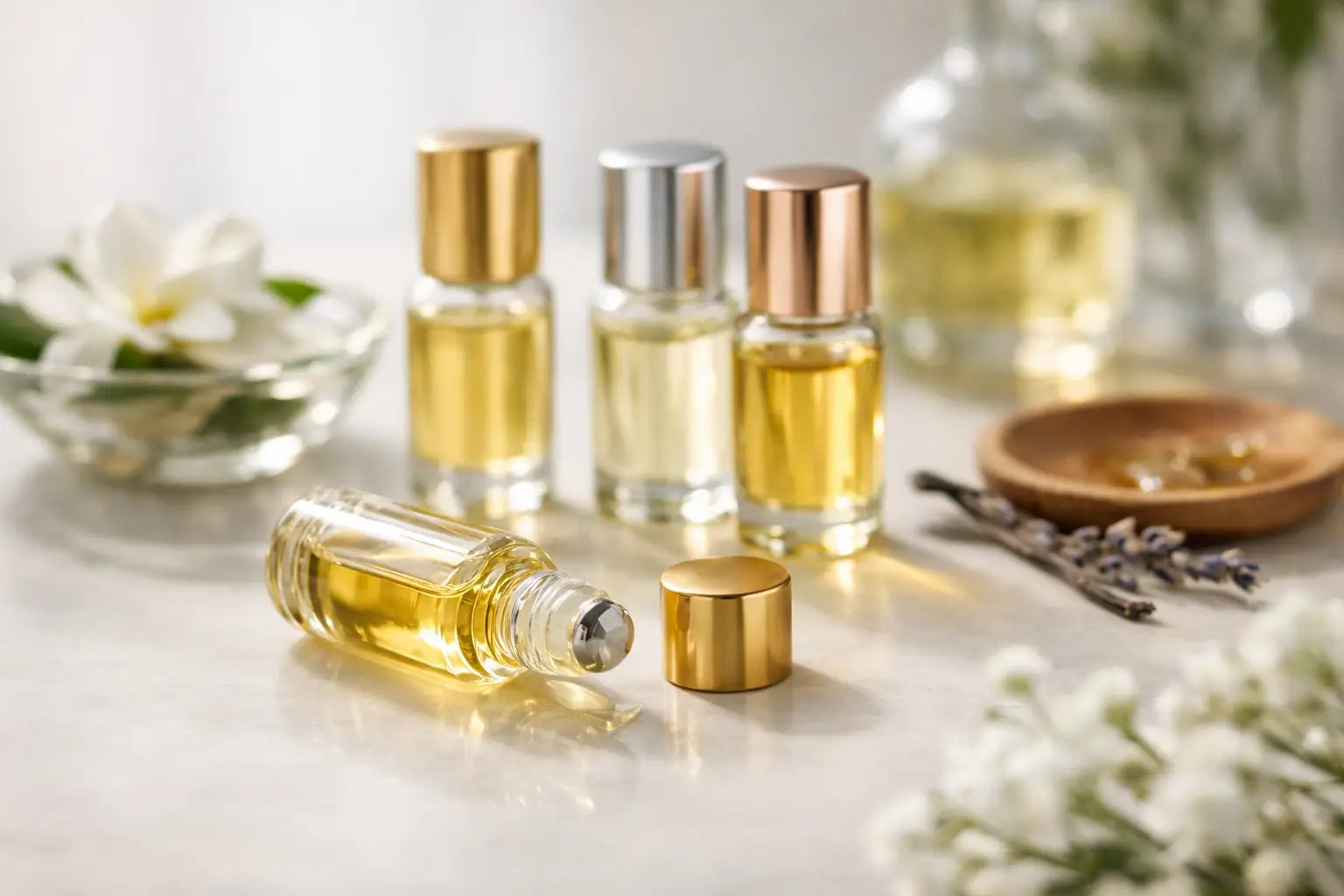
Perfume oils are also beautifully suited to ritual. Rolling or dabbing fragrance onto the wrists, neck, inner elbows, and behind the ears invites a pause. It is a small act of self-care before work, before a date, before rest, or anytime you need to return to yourself.
The wear of perfume oil
Because perfume oils stay close to the body, they are often described as long-lasting but low projection. The oil does not evaporate as quickly as alcohol, so the fragrance can remain on the skin for hours. At the same time, its scent trail is usually more subtle than a spray.
This makes perfume oil a lovely choice for offices, close gatherings, travel days, intimate evenings, and anyone who prefers compliments from up close rather than a fragrance that enters the room first. If you love the idea of a signature scent that feels like part of your skin, an oil may speak your language.
There is a trade-off: because an oil wears more quietly, you may not get the dramatic first impression some people want from a fragrance. Hot weather, dry skin, and the specific notes in a blend can also affect how long and how strongly it wears.
What a Perfume Spray Does Best
A perfume spray creates lift. With one or two mists, fragrance opens into the air around you, allowing top notes such as bergamot, pear, citrus, or sparkling fruits to feel especially vivid at first. This can make sprays feel fresh, expressive, and instantly polished.
Spray perfume is often the format people reach for when they want a scent to be noticed. It can feel perfect for a dinner reservation, a special event, a night out, or any moment when you want your fragrance to leave a graceful impression beyond your personal space.
The alcohol base helps fragrance travel, but it also means the scent’s opening can pass more quickly. You may notice a bright burst in the first few minutes, followed by the heart and base notes as the fragrance settles. Depending on the formula, you may want to reapply later in the day.
The wear of perfume spray
If your goal is projection, spray usually has the advantage. It tends to create a more noticeable scent cloud, particularly in its opening. This makes it easy to refresh your clothes, hair, or body with a light mist, although you should follow product directions and avoid spraying delicate fabrics that may stain.
A spray can also be ideal if you enjoy experiencing the full architecture of a fragrance. You may notice the opening notes, floral or gourmand middle notes, and warm dry-down in distinct stages. It is a more outward expression of scent, while perfume oil is often a closer, slower conversation.
Still, more projection is not always more luxurious. Strong fragrance can feel overwhelming in small spaces, around scent-sensitive people, or in settings where subtlety is part of the elegance. The most beautiful fragrance is one worn with intention.
How to Choose Between Perfume Oil and Spray
Start with the feeling you want. If you want fragrance to become a private source of confidence, calm, and sensuality, choose perfume oil. If you want a brighter entrance and a scent that carries beyond the skin, a spray may be the better fit.
Your routine matters, too. Perfume oil is compact and easy to keep in a handbag, desk drawer, or travel pouch for a quiet touch-up. Its rollerball or dabber application gives you control over exactly where the fragrance goes. Sprays are quick and effortless when you are getting ready in a hurry or want an all-over mist before stepping out.
Consider your skin as well. Fragrance may perform differently on everyone because skin chemistry, hydration, weather, and even clothing can change what you smell. Oils often cling especially well to moisturized skin. If you wear a spray, applying an unscented lotion first may help the fragrance feel more lasting and rounded.
The scent family can influence your choice. Deep notes like amber, vanilla, sandalwood, musk, and oud often feel especially rich in oil form, where they can melt into the skin with warmth. Fresh citrus, airy florals, and sparkling fruity notes can shine in sprays, where their brightness has room to bloom. But there are no hard boundaries - a soft floral oil can be unforgettable, and a warm gourmand spray can feel absolutely enveloping.
Can You Wear Both?
Absolutely. Many fragrance lovers keep both formats in their collection because they serve different moments. You might wear a perfume oil for your everyday signature scent, then reach for a spray when you want a little more presence for an evening out. You can also layer thoughtfully, starting with a small amount of oil on pulse points and finishing with a light mist of a complementary fragrance.
Layering works best when you keep it simple. Pair scents with a shared note, such as vanilla and amber, rose and musk, or citrus and sandalwood. Give each fragrance room to breathe rather than applying too much at once. The goal is not to create a cloud of competing notes. It is to create something that feels uniquely yours.
Application Makes a Difference
With perfume oil, apply a small amount to pulse points and allow it to settle. Avoid rubbing your wrists together aggressively, as friction can alter the way delicate top notes develop. A touch on the collarbone or behind the knees can create a lovely soft diffusion as you move.
With spray perfume, mist from several inches away onto skin rather than soaking one area. The neck, wrists, inner elbows, and chest are classic choices. One or two sprays are often enough, especially if you will be sharing close space with others. If you want a gentler effect, mist the air and walk through it, though applying directly to skin usually gives a more lasting result.
Store both formats away from direct sunlight, heat, and humidity. A dresser drawer or cool cabinet is kinder to fragrance than a sunny bathroom shelf. Protecting your perfume helps preserve the notes you fell in love with from the first wear.
Perfume is an invitation to honor your mood, your memories, and the version of yourself you want to meet each day. Whether you choose the intimate glow of an alcohol-free perfume oil or the radiant lift of a spray, let your scent be a reminder that you deserve to feel beautiful in your own presence.