Fragrance Oil vs Essential Oil: Which Is Right?
A scent can change the feeling of a room before you have time to name it. It can make a quiet bath feel more restorative, bring softness to a busy morning, or become the final touch that helps you carry yourself with confidence. When choosing fragrance oil vs essential oil, the best option is not always the one with the most romantic label. It is the one that fits the way you want to feel, wear, and live with scent.
Both can be beautiful parts of a personal fragrance or home ambiance ritual. Yet they are made differently, perform differently, and come with different considerations for skin, candles, and diffusers. Understanding those differences helps you choose with more intention.
What Is an Essential Oil?
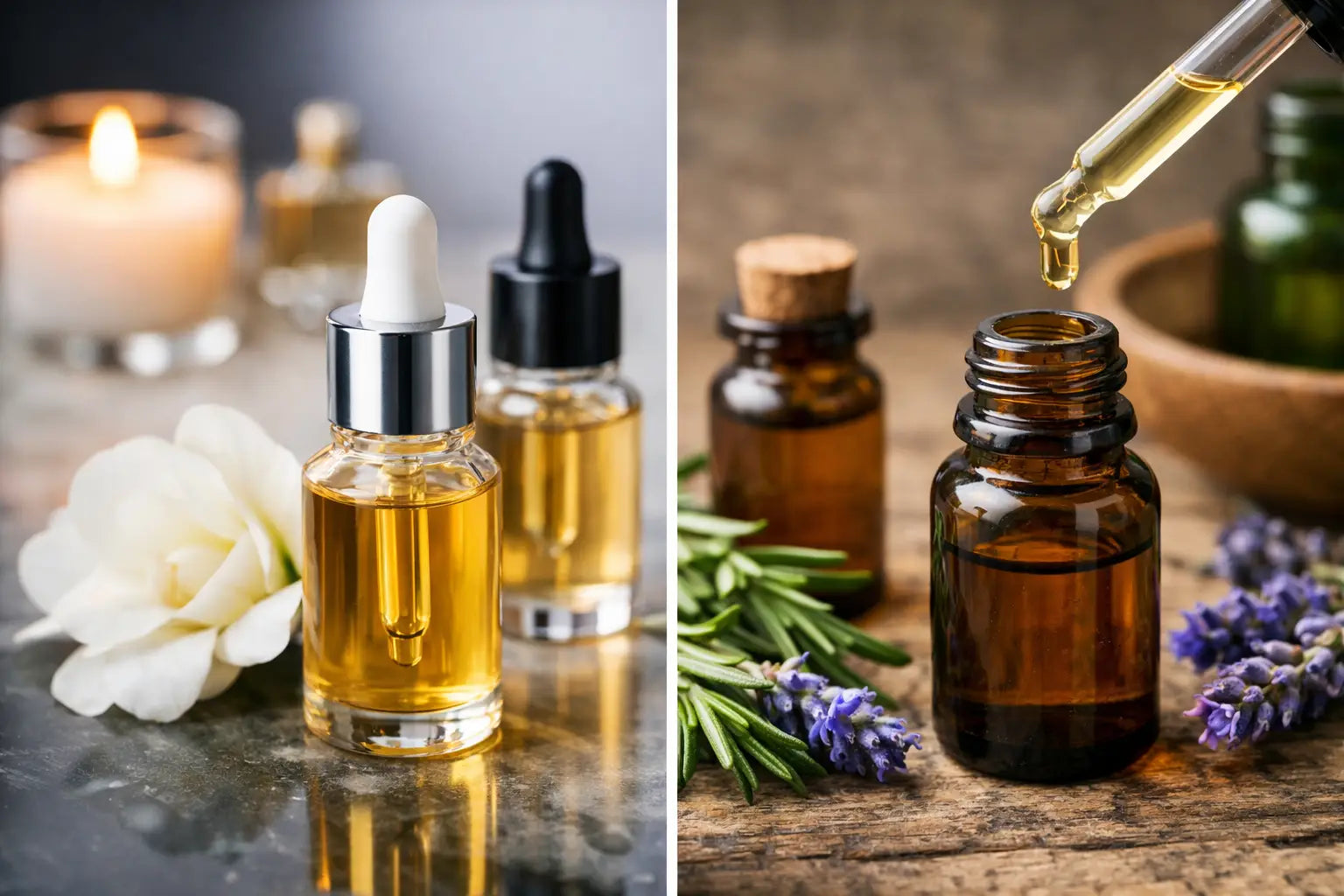
Essential oils are concentrated aromatic extracts derived from plants. Depending on the plant, the oil may be steam-distilled from flowers, leaves, bark, roots, or wood, or expressed from a citrus peel. Lavender, peppermint, eucalyptus, lemon, rose, and sandalwood are familiar examples.
Because essential oils come from botanical material, their aroma often feels vivid, textured, and close to nature. A true lavender essential oil may smell herbal and lightly sweet rather than like a perfectly uniform lavender candle from one batch to the next. Weather, harvest conditions, plant origin, and extraction method can all influence the final scent.
That natural character is part of the appeal. Essential oils are often chosen for rituals centered on atmosphere and emotional grounding: a few drops of lavender for an evening wind-down, bright citrus for a morning refresh, or eucalyptus for a spa-like shower moment.
Still, natural does not automatically mean gentle or risk-free. Essential oils are highly concentrated. Some can irritate skin, trigger sensitivities, or cause photosensitivity when applied before sun exposure, especially certain citrus oils. They should never be used undiluted on skin, and not every essential oil is appropriate for every person, child, pet, or space.
What Is a Fragrance Oil?
Fragrance oils are crafted scent compositions designed to create a particular aromatic experience. They may contain naturally derived aromatic materials, synthetic aroma molecules, or a blend of both. Their purpose is artistic as much as functional: to build a scent that can be creamy, sparkling, mysterious, nostalgic, clean, or deeply sensual.
A fragrance oil can capture notes that do not exist as essential oils, such as cashmere, rain-kissed linen, warm vanilla cake, sea salt, leather, champagne, or an imagined bouquet in full bloom. It can also pair familiar botanicals with notes that give them more dimension and staying power. Think of jasmine softened by amber, lemon brightened with sugared citrus, or sandalwood wrapped in musk.
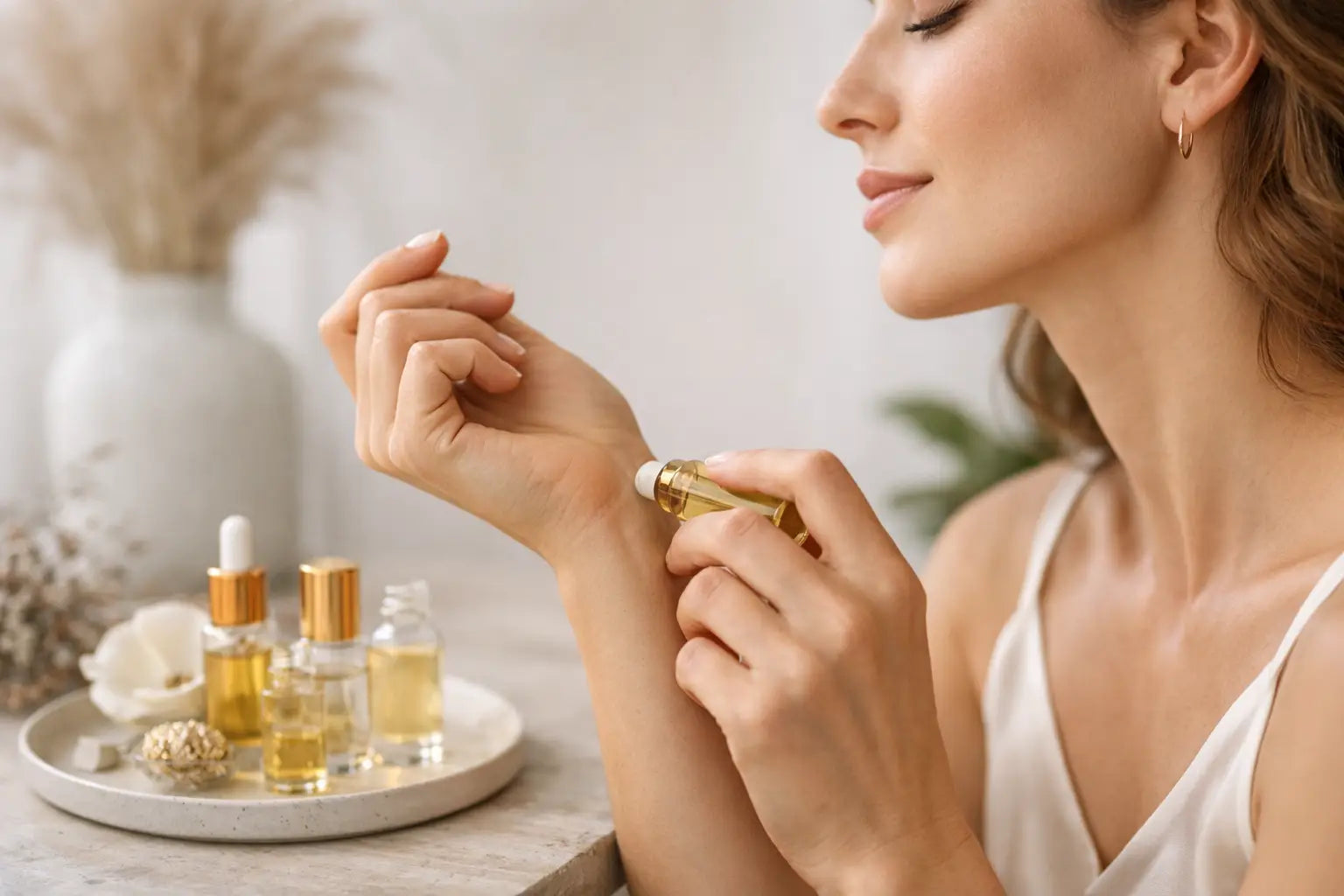
For personal fragrance, perfume fragrance oils are often blended into a carrier oil rather than alcohol. This creates a more intimate style of wear. Instead of announcing itself from across the room, an alcohol-free perfume oil may bloom gently on warm skin and remain close enough to feel like a private luxury.
Fragrance oils are also widely used in candles, wax melts, reed diffusers, soaps, and body products because they can be formulated for strong, lasting scent performance. The important detail is that suitability depends on the specific formula. A fragrance oil made for a candle is not automatically safe for skin, and a body-safe fragrance oil is not necessarily appropriate for every diffuser or wax application.
Fragrance Oil vs Essential Oil: The Real Differences
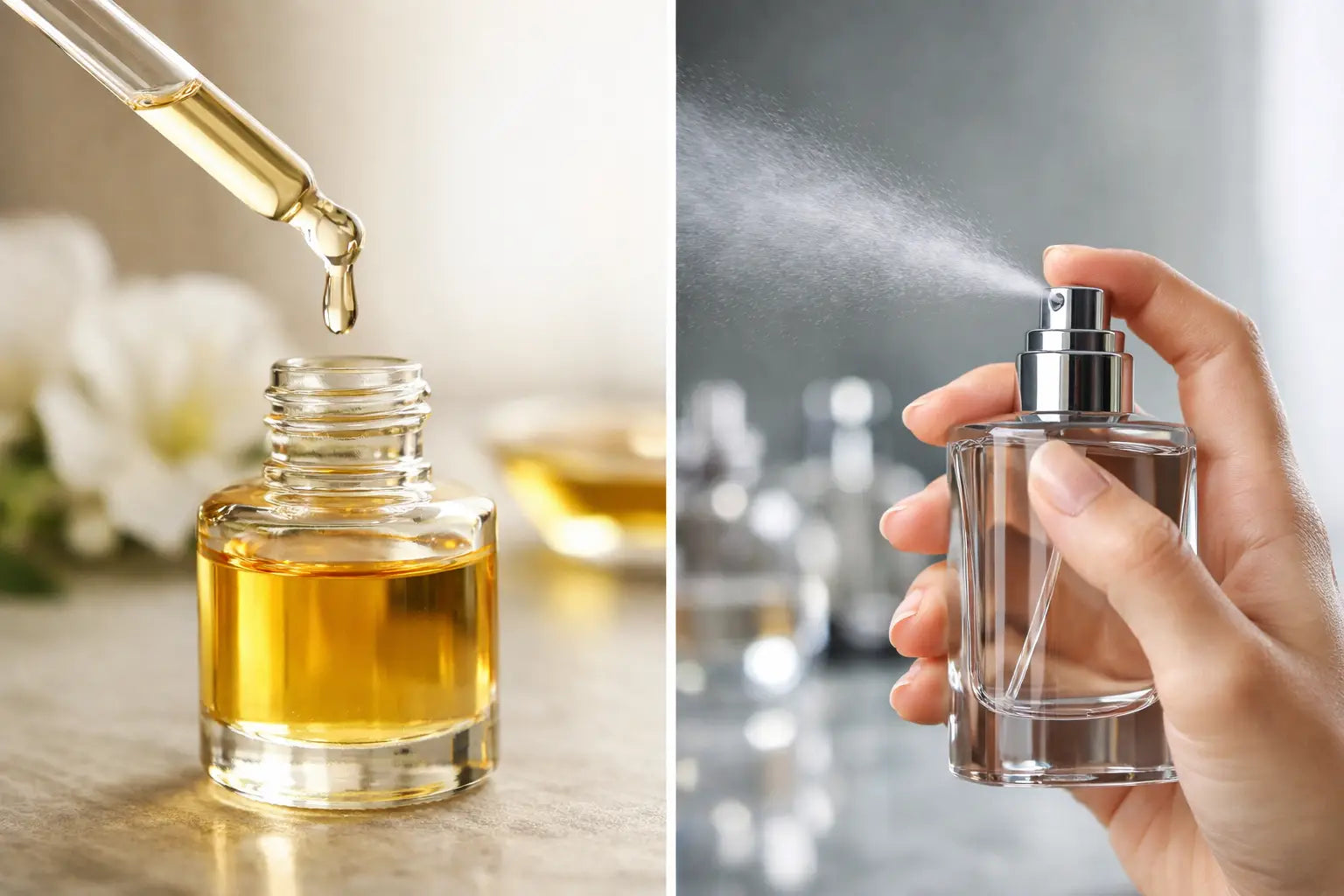
The clearest difference is origin. Essential oils are extracted from plants, while fragrance oils are formulated blends. But the choice becomes more personal when you consider scent range, consistency, longevity, and intended use.
Scent creativity and complexity
Essential oils offer the beauty of nature in its concentrated form. If you love crisp grapefruit, green rosemary, smoky vetiver, or soft floral neroli, they can bring an honest botanical presence to your ritual.
Fragrance oils offer a broader fragrance wardrobe. They can recreate familiar scents and create entirely new ones, including gourmand, clean-laundry, cozy, oceanic, and perfume-inspired profiles. For someone searching for a signature scent that feels like confidence in a bottle, fragrance oil often provides more creative possibility.
Consistency from one experience to the next
A plant harvest can vary, which means essential oils can vary too. That is not a flaw. It is part of their living, botanical nature. But if you want your favorite candle or perfume to smell recognizably the same every time you repurchase it, a carefully formulated fragrance oil is often more consistent.
Longevity and performance
Some essential oils evaporate quickly, especially bright top notes such as lemon, orange, and peppermint. Others, including patchouli, vetiver, and sandalwood, tend to linger longer. Their performance depends on the oil itself and the formula around it.
Fragrance oils can be built with a balanced note structure and scent materials selected for longevity. In a perfume oil, that may mean a fragrance that stays softly present through the day. In a candle or reed diffuser, it may mean a fuller scent experience that continues to make your space feel beautifully cared for.
Price and availability
Certain essential oils are expensive because the plants yield very little aromatic material. Rose, jasmine, neroli, and sandalwood can be especially costly. Seasonal availability and sourcing can also affect price.
Fragrance oils can make a wider variety of scent experiences more accessible. That does not make them lesser. It simply makes them different. Luxury is not limited to what comes directly from a flower. It can also live in the artistry of a beautifully composed aroma that makes you feel seen.
Which One Belongs in Your Ritual?
Choose essential oil when you want a botanical-forward experience and you enjoy the distinctive character of plant aromas. It can be a lovely choice for personal diffusion, bath rituals when properly diluted, and moments when you want your surroundings to feel fresh, herbal, citrusy, or grounded in nature.
Choose fragrance oil when you want a more expressive scent story, a specific mood, or dependable performance in a home fragrance product. It is especially well suited to fine fragrance, candles, reed diffusers, and scented body products when the formula has been designed and tested for that purpose.
You do not have to choose one forever. Your bedside diffuser might feature lavender essential oil on a slow Sunday night, while your favorite perfume oil brings vanilla, amber, and soft floral notes to a dinner date. Your living room candle may smell like warm woods and a little New Orleans-inspired charm because that is the feeling you want to come home to.
Safety Matters More Than the Label
The most useful rule is simple: use only products made for the application you have in mind. Do not add a random fragrance oil to a bath, apply undiluted essential oils to skin, or assume that an oil safe for a wax warmer belongs in a body product.
For skin, look for a finished perfume oil or body product formulated specifically for topical use, and patch test when trying something new. If you are pregnant, managing a medical condition, have allergies or sensitive skin, or are choosing products around children or pets, extra care is wise. A qualified healthcare professional can help with personal concerns.
For candles and diffusers, follow the product directions rather than experimenting with concentration. More oil does not necessarily create a better scent experience. It can affect performance, create irritation, or compromise the way a product is designed to burn or diffuse.
At Marie’s Blazing Aromas, scent is meant to feel like a small act of self-devotion, not a complicated science project. A thoughtfully crafted fragrance can bring calm to your space, elegance to your routine, and a little more intention to the moments that belong only to you.
Let your choice begin with the feeling you want to create. Reach for botanical essential oils when you crave nature’s raw, aromatic beauty. Reach for fragrance oils when you want a scent that tells a fuller story. The right aroma is the one that makes your body, your home, and your spirit feel more like your own.