
Artículo: Soy Wax vs Beeswax Candles for Your Home
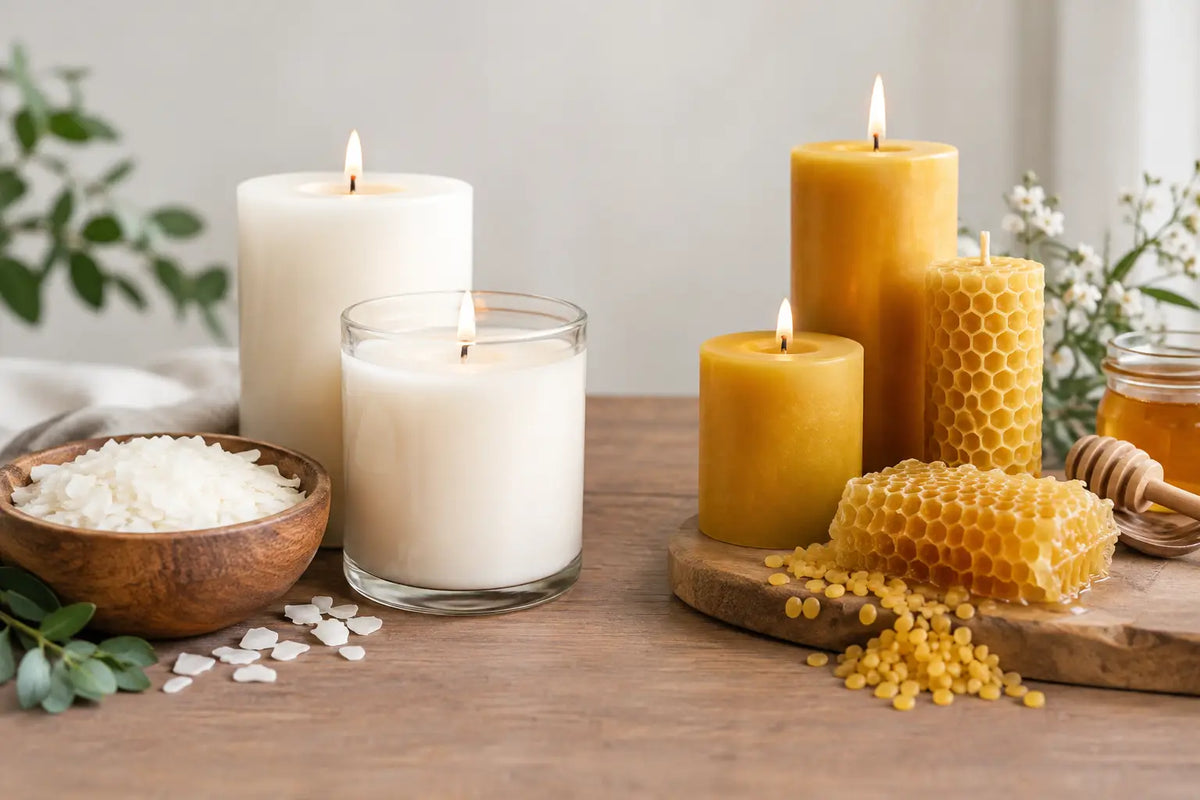
Soy Wax vs Beeswax Candles for Your Home
A candle can change the emotional temperature of a room in minutes. The gentle glow at the end of a long day, the fragrance that makes your bedroom feel like a private retreat, the thoughtful finishing touch before guests arrive - these details matter. When choosing between soy wax vs beeswax candles, the right answer is less about declaring one wax superior and more about choosing the experience you want your space to hold.
Both are natural waxes with devoted fans. Soy wax offers a smooth, scent-forward ritual that feels at home in an elevated fragrance collection. Beeswax brings a warm golden glow and a softly honeyed character all its own. Their differences show up in the way they look, burn, carry fragrance, and fit into your values.
Soy Wax vs Beeswax Candles: The Essential Difference
Soy wax is made from soybean oil that has been processed into a solid wax. It is widely used in container candles because it has a creamy appearance, a relatively low melting point, and a lovely ability to hold fragrance. Most scented soy candles are poured into jars, tins, or vessels designed to make every burn feel intentional.
Beeswax is produced by honeybees as they build honeycomb. It is naturally firm, golden in color, and carries a subtle aroma often described as warm, sweet, or lightly honey-like. You will find it in classic pillar candles, tapers, and sculptural candles, although it can also be used in containers.
That origin story shapes the atmosphere each wax creates. Soy is an inviting canvas for a carefully composed fragrance blend - think creamy vanilla, soft cashmere, bright citrus, or a grounding woods-and-amber evening scent. Beeswax is more distinctive on its own. Its natural aroma and deeper color can become part of the sensory experience, especially for those who enjoy an understated, less perfume-driven candle.
For Fragrance Lovers, Soy Often Has the Advantage
If you select candles based on how they make your home feel, fragrance performance is likely at the center of your decision. Soy wax is popular for scented candles because its neutral, creamy profile allows fragrance oils to take the lead. With the right formula, cure time, vessel, and wick, it can offer a beautiful cold throw before lighting and a comforting scent experience once the wax pool develops.
Soy does not always fill a large open room as quickly as a paraffin candle might. That is not necessarily a flaw. Many fragrance lovers prefer a softer, more intimate diffusion that builds as they settle into the moment. In a bedroom, office, bathroom, or cozy living space, a well-made soy candle can feel personal rather than overpowering.
Beeswax has its own natural scent, which can be beautiful but may compete with delicate fragrance compositions. For that reason, it is often favored by people who enjoy the wax’s authentic character or who want an unscented candle. Strongly fragranced beeswax candles do exist, but the finished aroma may feel different from the same blend poured in soy.
If your ritual begins with choosing a scent for calm, confidence, romance, or nostalgic comfort, soy is usually the more versatile choice. It gives complex notes room to unfold, from sparkling top notes to the warm, lingering base that makes a space feel cared for.
Burn Time Depends on More Than Wax
Beeswax is denser and has a higher melting point than soy wax, so a beeswax candle can burn slowly, particularly in a properly made pillar or taper. This has helped create its reputation as the longer-lasting option.
Still, burn time is not a simple soy-versus-beeswax contest. The candle’s size, wick, fragrance load, vessel shape, and how it is burned all make a meaningful difference. A wide jar with too-large a wick can burn through either wax quickly. A narrow, well-wicked soy candle may offer many hours of beautiful ambiance.
Soy wax melts at a lower temperature, which means it creates a liquid wax pool more easily. For a container candle, that pool helps release fragrance. To get the most from it, allow your candle to burn long enough for the melted wax to reach close to the edges of the vessel, especially during the first few burns. This helps reduce tunneling and lets you enjoy more of the candle you chose.
With either wax, trim the wick to about one-quarter inch before lighting, keep the candle away from drafts, and follow the maker’s burn-time guidance. Candle care is a small act of self-care too: a few quiet seconds that protect the atmosphere you are creating.
Appearance: Creamy Minimalism or Golden Tradition
Soy wax brings a soft, elegant look to modern home fragrance. It is typically ivory or creamy white, making it a natural match for clean vessels, refined labels, and nearly any decor style. It can occasionally develop a frosted or crystalline appearance on the surface, especially with temperature changes. This is a natural characteristic of soy and does not mean the candle is old or poorly made.
Beeswax has a warmer visual presence. Its color can range from pale cream to deep gold depending on the filtering process and the nectar sources available to the bees. A hand-poured beeswax taper feels timeless on a dinner table. A sculptural beeswax candle can feel like decor before it is ever lit.
Choose soy when you want your fragrance and vessel to set the mood. Choose beeswax when you are drawn to a more rustic, heritage-inspired glow and the beauty of the wax itself.
Sustainability Has More Than One Layer
Both soy and beeswax are often chosen as alternatives to petroleum-derived paraffin wax, but neither has a one-word sustainability story.
Soy is plant-based, renewable, and generally biodegradable. However, soy farming involves land use, water, transportation, and agricultural practices that vary widely by region and producer. Not every soy wax is identical, either. Some formulations are blended with other waxes or additives to improve appearance and performance.
Beeswax is a natural byproduct of beekeeping, but its sustainability depends on thoughtful apiary practices and the welfare of the bees. Beeswax is also more limited in supply, which can make it more expensive. For shoppers who value bee-centered products, asking how a maker sources beeswax can be as meaningful as asking where soy was grown.
A more mindful choice considers the full candle: the wax, the quality of the fragrance ingredients, the wick, the reusable or recyclable vessel, and whether you will genuinely enjoy burning it. A candle that becomes a beloved part of your evening ritual is less likely to be forgotten at the back of a cabinet.
What About Clean Burning and Air Quality?
Natural wax alone does not guarantee a perfectly clean burn. Smoke and soot can come from an oversized wick, a drafty room, fragrance overload, or a wick that has not been trimmed. Any candle, including a soy or beeswax candle, should be burned with care in a well-ventilated space.
Beeswax is often praised for its clean-burning reputation, while soy is valued for producing less visible soot than many conventional alternatives when it is properly wicked. The most useful thing to look for is skilled craftsmanship. A candle maker should test the wax, wick, fragrance, and vessel together rather than assuming a natural wax will perform beautifully on its own.
At Marie’s Blazing Aromas, handcrafted soy candles are designed for those moments when fragrance becomes part of your care routine: the exhale after work, the reset before sleep, the soft confidence of a home that smells unmistakably like you.
Which Candle Belongs in Your Ritual?
Choose a soy wax candle if fragrance is your first love. It is especially suited to shoppers who want layered scent, an elegant container, and a mood-setting experience that can shift with the season or the moment. A bright floral can bring lightness to a Sunday morning; a velvety amber blend can make an ordinary evening feel more intimate.
Choose beeswax if you love a naturally scented, richly colored candle with a classic feel. It is a beautiful choice for candlelit dinners, seasonal tablescapes, unscented rituals, or anyone drawn to traditional tapers and pillars.
You do not have to pledge loyalty to one wax forever. Keep beeswax tapers for the dining table and reach for a fragrant soy candle when you want to turn your living room into a sanctuary. Let the scent, setting, and feeling you want to carry guide you. The best candle is the one that makes you slow down, breathe deeply, and remember that your space deserves beauty too.