Soy Paraffin Comparison for a More Beautiful Burn
A candle can change the feeling of a room before its flame has fully settled. In a thoughtful soy paraffin comparison, the question is not simply which wax is better. It is which experience belongs in your home, supports your rituals, and carries the fragrance memories you want to hold close.
Soy and paraffin wax each bring something different to the candle jar. One may appeal to your desire for plant-based materials and a slower, softer burn. The other may deliver the strong fragrance presence that fills a room before company arrives. Knowing the difference helps you choose with confidence, whether you are setting the mood for a quiet evening, selecting a meaningful gift, or creating a home that feels unmistakably yours.
Soy Paraffin Comparison: The Essential Difference
Soy wax is made from soybean oil that has been processed into a solid wax. It is commonly chosen by candle lovers looking for a plant-based option and a warm, gentle burn. Because soy is a renewable agricultural resource, it often aligns with an eco-conscious lifestyle, especially for shoppers who want home fragrance to feel as intentional as the rest of their self-care routine.
Paraffin wax is derived from petroleum refining. It has been used in candle-making for generations because it is reliable, smooth, and especially effective at carrying fragrance and color. A well-made paraffin candle can offer a bright flame, a polished appearance, and a powerful scent experience.
Neither wax tells the whole story alone. The quality of the fragrance oil, wick, vessel, wax percentage, cure time, and maker's craftsmanship all influence how a candle performs. A candle's soul is found in the finished composition, not in one ingredient on a label.
Burn Time and the Pace of Your Ritual
Soy wax generally burns at a lower temperature than paraffin. This often means a soy candle can last longer when it is properly wicked and cared for. For someone who lights a candle during evening baths, Sunday resets, prayer, journaling, or slow mornings with coffee, that unhurried burn can feel like a small luxury that keeps giving.
Paraffin typically burns more quickly, though burn time varies dramatically by candle size, wick choice, and formula. Its higher melt point can create a different wax pool and flame behavior. A paraffin candle may be a beautiful choice when your priority is a more immediate, noticeable fragrance moment rather than the longest possible burn.
Burn time also depends on how you use your candle. Allowing the wax to melt close to the edges on the first burn helps prevent tunneling. Keeping the wick trimmed to about one-quarter inch before lighting can support a cleaner, steadier flame. These simple habits honor the craftsmanship in any candle, regardless of wax type.
Scent Throw: Soft Atmosphere or Full-Room Fragrance?
Scent throw is often the deciding factor in a soy versus paraffin conversation. It refers to how well a candle releases fragrance when unlit, known as cold throw, and when burning, known as hot throw.
Paraffin is known for holding and releasing fragrance very effectively. For larger spaces, open-concept homes, or bold notes such as warm vanilla, spice, leather, citrus, or deep woods, paraffin can create a strong aromatic presence. It is often chosen by those who want their entryway, living room, or entertaining space to make an impression.
Soy wax can offer a more intimate scent experience. In a bedroom, office, bathroom, or cozy reading corner, its fragrance may bloom with a softer, more natural-feeling diffusion. That gentler presence is not a lesser one. It can be ideal when you want aroma to support calm rather than command the room.
The phrase “soy candles have no scent throw” is simply too broad to be useful. A carefully formulated soy candle with a compatible fragrance oil, correct wick, and adequate cure time can scent a space beautifully. Yet it is fair to say that paraffin often has an easier path to a stronger hot throw. It depends on the specific candle and the feeling you want the room to hold.
What About Soy-Paraffin Blends?
Many candle makers use blends because blends can balance the strengths of both waxes. A soy-paraffin blend may offer a creamy appearance, good glass adhesion, a satisfying melt pool, and a fuller fragrance throw than soy alone. This is not a shortcut or a compromise by definition. It is a formulation choice.
For shoppers, the most useful question is not whether a blend is “good” or “bad.” Ask whether the maker is transparent about the wax, whether the candle burns evenly, and whether its fragrance performs in a way that feels true to the product's promise.
Appearance, Texture, and the Beauty of Imperfection
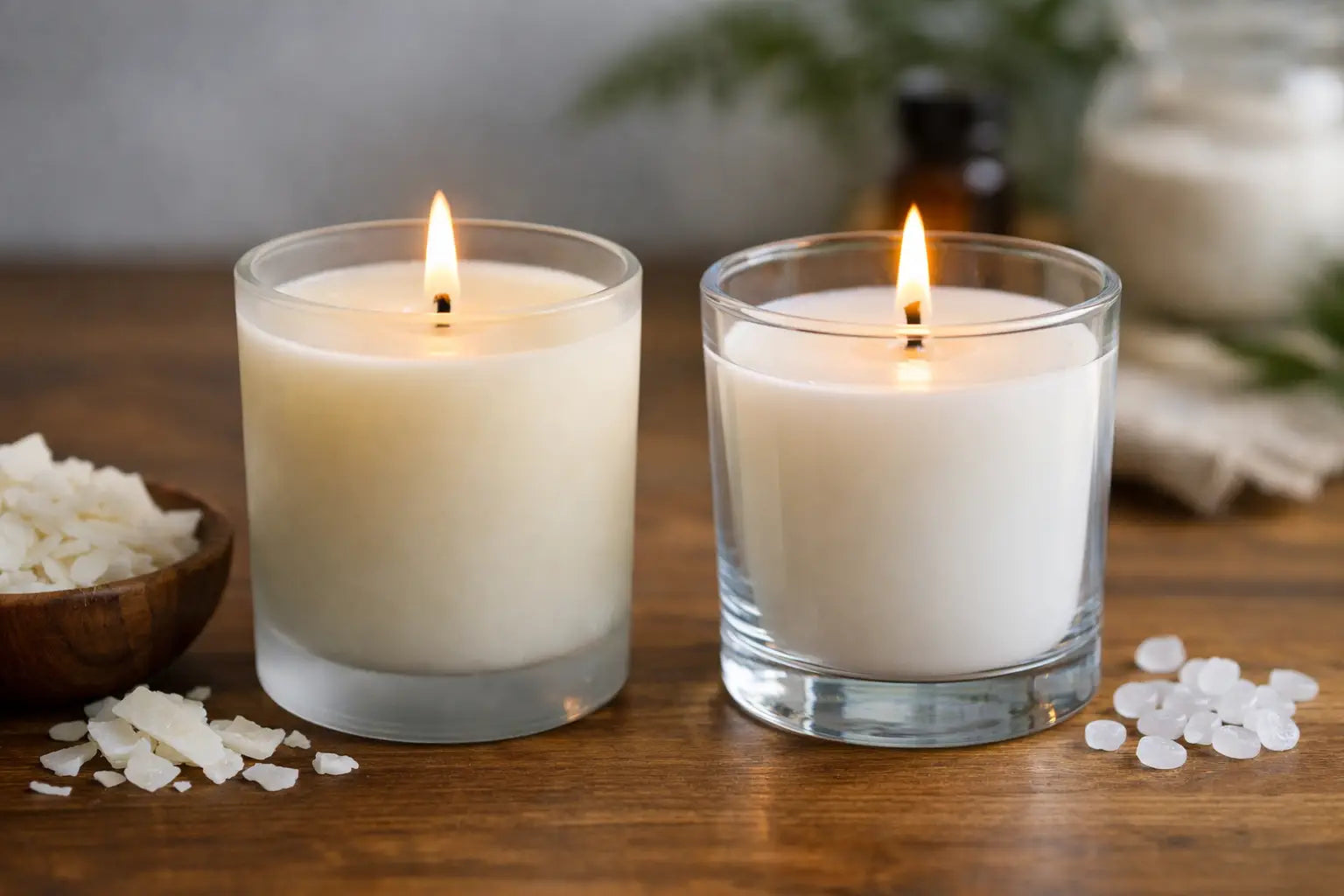
Soy wax has a naturally creamy, sometimes slightly rustic character. You may notice frosting, which appears as a white crystalline layer on the surface or sides of a candle. You may also see small variations in texture after a temperature change. These details are normal in natural wax and do not mean the candle is damaged or unsafe to enjoy.
Paraffin usually delivers a smoother, more uniform finish. It can hold vivid color and create a sleek, polished surface that many people love. If visual perfection is high on your list, paraffin or a blend may have an advantage.
Still, there is a quiet beauty in soy's variation. Like hand-poured pottery or a bouquet gathered for your table, it carries a reminder that something was made with care rather than pressed into sameness. For Marie's Blazing Aromas, that handmade character belongs naturally beside fragrance designed to comfort, uplift, and bring a sense of personal luxury to everyday life.
Sustainability and Ingredient Considerations
Soy is often presented as the more sustainable option because it comes from a renewable crop, while paraffin comes from a fossil-fuel-based source. That distinction matters, particularly for buyers who are building more mindful home rituals.
At the same time, sustainability is more nuanced than a single word on a label. Soybean farming has its own environmental considerations, including land use, farming practices, and transportation. Paraffin's origin may not align with every shopper's values, but its long-standing use and performance characteristics remain meaningful to many candle lovers.
If environmental priorities guide your purchase, look beyond the wax. Consider reusable or recyclable vessels, responsible packaging, small-batch production, and whether you will truly enjoy and use the candle. A beloved candle burned fully and repurposed afterward can be part of a more thoughtful home fragrance practice.
Health claims deserve the same care. No candle should be treated as a health product, and any candle can create soot if it is poorly wicked, burned too long, or left with an overgrown wick. Choose products from makers who take ingredients and testing seriously, burn in a well-ventilated area, and always follow candle safety guidance.
Which Wax Is Right for You?
Choose soy wax when you are drawn to a plant-based candle, a slower and more intimate burn, and the gentle charm of a hand-poured finish. It is especially lovely for personal spaces where calm, comfort, and subtle fragrance help you return to yourself.
Choose paraffin when a strong fragrance throw, smooth appearance, and vivid scent expression are your highest priorities. It can be wonderful for hosting, larger rooms, and anyone who wants their favorite aroma to feel present from corner to corner.
Choose a soy-paraffin blend when you appreciate balance. You may enjoy the creaminess associated with soy alongside the fragrance performance and finish paraffin can support. The best choice is the one that turns lighting a candle into a moment of care, confidence, and inner peace.
Let your senses lead. A candle is more than wax and wick. It is the amber glow beside your evening tea, the scent that welcomes you home, and the small reminder that your space deserves to feel beautiful, too.