How to Pick Candle Scents for Every Room
A candle can make a freshly made bed feel like a retreat, turn a quiet bath into a ritual, or soften the edges of a long day. But the scent that feels perfect in one space can feel too sweet, too sharp, or simply out of place in another. Learning how to pick candle scents begins with a simple question: how do you want to feel when you walk into the room?
Fragrance is personal. It holds memory, creates atmosphere, and gives your home a signature that is all your own. There is no single right scent family for everyone, but there are thoughtful ways to choose aromas that complement your space, your routines, and the season you are living in.
Start With the Feeling You Want to Create
Before choosing between vanilla, jasmine, sandalwood, or citrus, name the mood you want your candle to support. A home fragrance should feel like an extension of your energy, not just something pleasant in the background.
For moments of rest, look toward notes that feel soft and settling. Lavender, warm vanilla, chamomile, cashmere, gentle woods, and creamy coconut can create a sense of comfort without asking too much of your senses. These scents are beautiful for winding down, reading, journaling, or making an ordinary evening feel more cared for.
If you want your space to feel polished and inviting, consider scents with a clean, elevated character. Fresh linen, bergamot, white tea, eucalyptus, pear, and light florals can bring brightness to a room while still feeling refined. They create the impression of a home that has been lovingly tended to, even on a busy week.
For confidence and depth, reach for richer blends. Amber, oud, leather, smoky woods, rose, spice, and musk can feel sensual, grounded, and quietly powerful. A deeper fragrance can transform a dining room, office, or evening living space into somewhere intimate and memorable.
How to Pick Candle Scents by Room
Every room has its own rhythm. The best candle scent is not always the boldest one - it is the one that belongs naturally in the space and supports what happens there.
Entryway: Make the First Impression Feel Warm
Your entryway introduces the mood of your home. Choose a scent that feels welcoming but does not overwhelm someone the moment they step inside. Citrus, soft florals, bergamot, fresh green notes, and light woods work especially well here.
A bright citrus-and-amber blend can feel sunny and elegant. A floral scent softened with sandalwood may feel more romantic. The goal is to create a beautiful first breath, not to fill the entire home with competing fragrance.
Living Room: Choose a Scent With Presence
The living room holds many versions of life: slow Sunday mornings, conversations with friends, movie nights, family gatherings, and the quiet exhale after work. This is a wonderful place for a scent with warmth and character.
Try creamy vanilla, amber, fig, cedarwood, cashmere, or a balanced floral-wood blend. These notes feel layered enough for a shared space. If you entertain often, avoid fragrances that are extremely sugary or intensely smoky, since they can compete with food, wine, or the personal fragrances of your guests.
Bedroom: Keep It Soft and Close
Your bedroom deserves a scent that feels like a gentle invitation to return to yourself. Choose low-key, comforting notes such as lavender, vanilla, soft musk, sandalwood, cotton, chamomile, or delicate rose.
Strong gourmands and sharp citrus fragrances can be energizing, which may be lovely during the day but less ideal when you are trying to rest. It depends on your ritual, of course. If a bright lemon scent reminds you of fresh sheets and a new beginning, that emotional connection matters more than a fragrance rule.
Bathroom: Fresh Does Not Have to Mean Basic
Bathrooms benefit from clean, airy fragrances, but clean can still be luxurious. Eucalyptus, mint, aloe, sea salt, white tea, bamboo, grapefruit, and spa-like florals give the room a refreshed feeling.
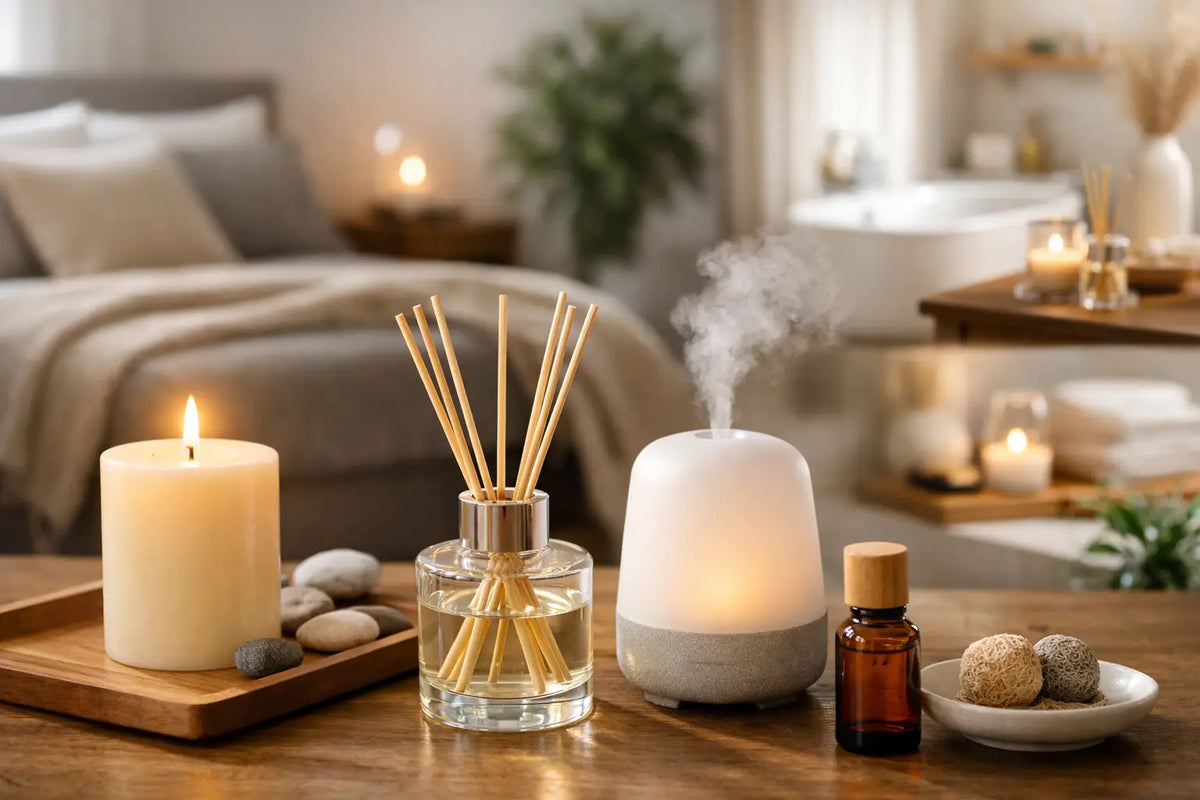
A reed diffuser may provide a subtle everyday fragrance in this smaller space, while a candle can elevate bath time or your nighttime skin-care ritual. Choose scents that make you feel restored, not scents that smell like harsh cleaning products.
Kitchen and Dining Area: Respect the Food
The kitchen is where restraint pays off. Heavy vanilla, cinnamon, and bakery scents may be comforting, but they can linger and clash with savory meals. Fresh herb, lemon, basil, orange, ginger, and light citrus notes tend to feel more natural around food.
Save richer, dessert-inspired candles for after dinner or for days when the kitchen is quiet. If you love a warm gourmand fragrance, burn it in the living room while you enjoy dessert instead of lighting it beside the stove.
Home Office: Encourage Focus Without Feeling Clinical
Your workspace can benefit from a scent that helps you feel clear, awake, and capable. Citrus, rosemary, mint, eucalyptus, ginger, tea, and subtle woods often bring an alert, composed energy.
Keep the fragrance lighter than you would in a larger living room. You may spend hours in this space, and a candle that feels invigorating for twenty minutes can become distracting by midafternoon. A smaller candle or a brief burn during the start of your workday may be all you need.
Let the Season Guide You, Not Limit You
Seasonal scent shifts can make your home feel in tune with the world outside. In spring, reach for florals, rain-kissed greens, pear, citrus, and airy linen notes. Summer often welcomes coconut, tropical fruit, sea salt, lemon, and bright botanicals.
Autumn invites warmth through amber, apple, clove, pumpkin, vanilla, sandalwood, and earthy woods. Winter can hold deeper notes such as fir, pine, cedar, spice, incense, bourbon, or rich vanilla.
Still, you do not have to put away a favorite scent because the calendar changes. If jasmine makes you feel beautiful in December, burn it. If a woodsy amber candle gives you calm in July, let it. Your signature scent should honor your inner season as much as the weather.
Understand Scent Strength Before You Commit
A beautiful fragrance can feel very different in a cold candle than it does when lit. The scent you notice before burning is often called the cold throw, while the fragrance that fills the room during a burn is the hot throw. Both matter, but the hot throw tells you more about how the candle will live in your space.
Consider room size when choosing intensity. A bold fragrance may feel sumptuous in an open living room yet overpowering in a small bedroom. Lighter scents can disappear in a large space, especially when windows are open or several people are gathered.
Soy candles often offer a clean, slow-burning experience and allow nuanced scent notes to unfold beautifully. For the best experience, give the candle time to create an even melt pool on its first burn, following the care instructions provided. This helps the fragrance perform as intended and makes your candle ritual feel more consistent.
Build a Fragrance Wardrobe Instead of Choosing One Forever
You do not need one candle scent that does everything. Just as you might choose a different perfume for a quiet afternoon than for a special night out, your home can have a small fragrance wardrobe.
Keep one scent for calm, one for hosting, one for focus, and one that feels purely indulgent. This creates variety without making your home feel chaotic. The key is choosing candles with a common thread, such as warm woods, soft florals, or fresh citrus, so your home still feels cohesive.
At Marie’s Blazing Aromas, scent is an invitation to make space for yourself - to choose confidence when you need it, comfort when you crave it, and beauty simply because you deserve it.
Trust the Memory Behind the Scent
The most meaningful candle is often not the one someone else calls the best. It is the one that reminds you of your grandmother’s garden, a New Orleans evening after rain, a beach trip, a fresh bouquet, or the version of yourself you are becoming.
Let fragrance be practical, but let it be emotional too. Choose the candle that makes your shoulders drop, your space feel more like home, and an ordinary moment feel worthy of being remembered.